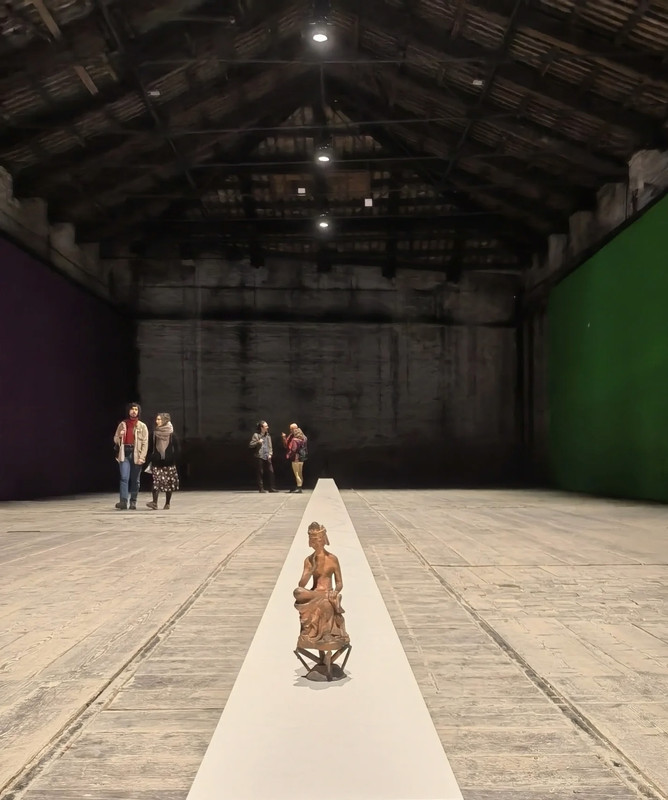
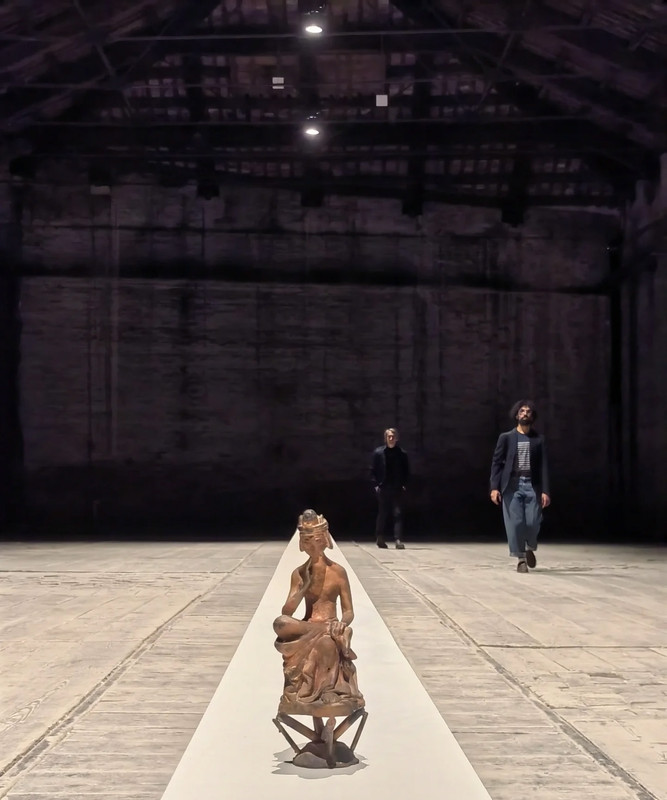
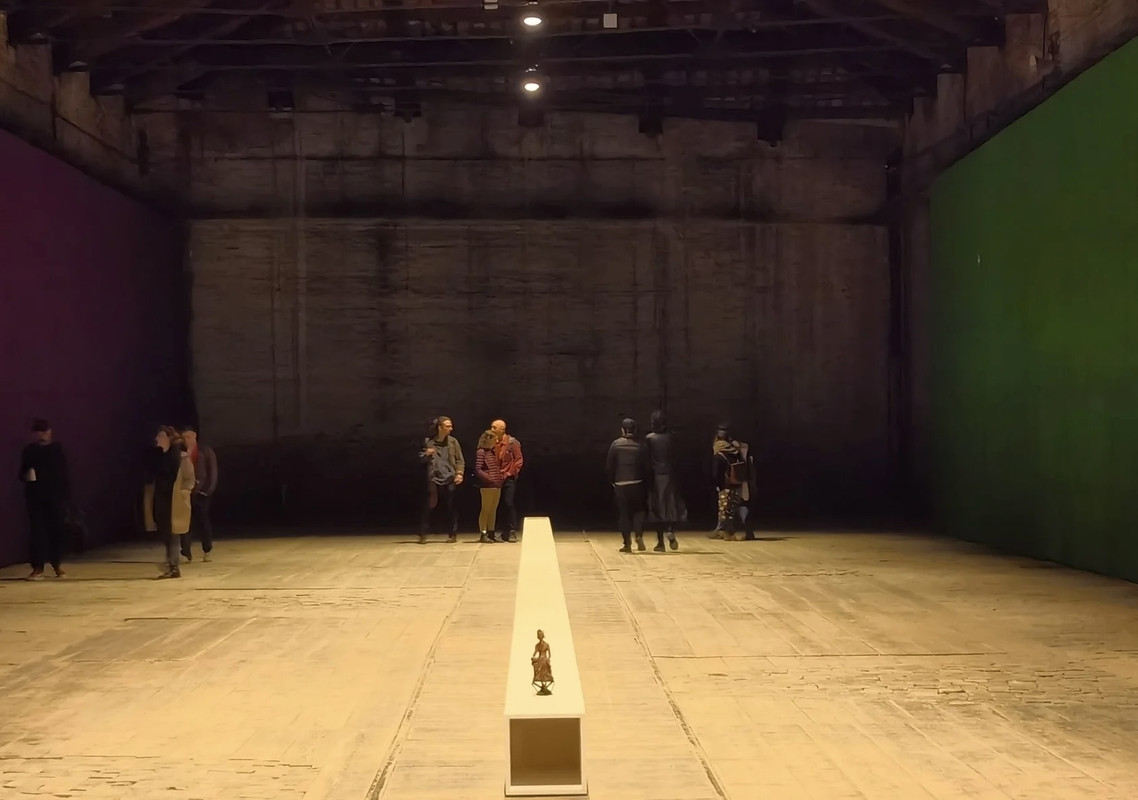
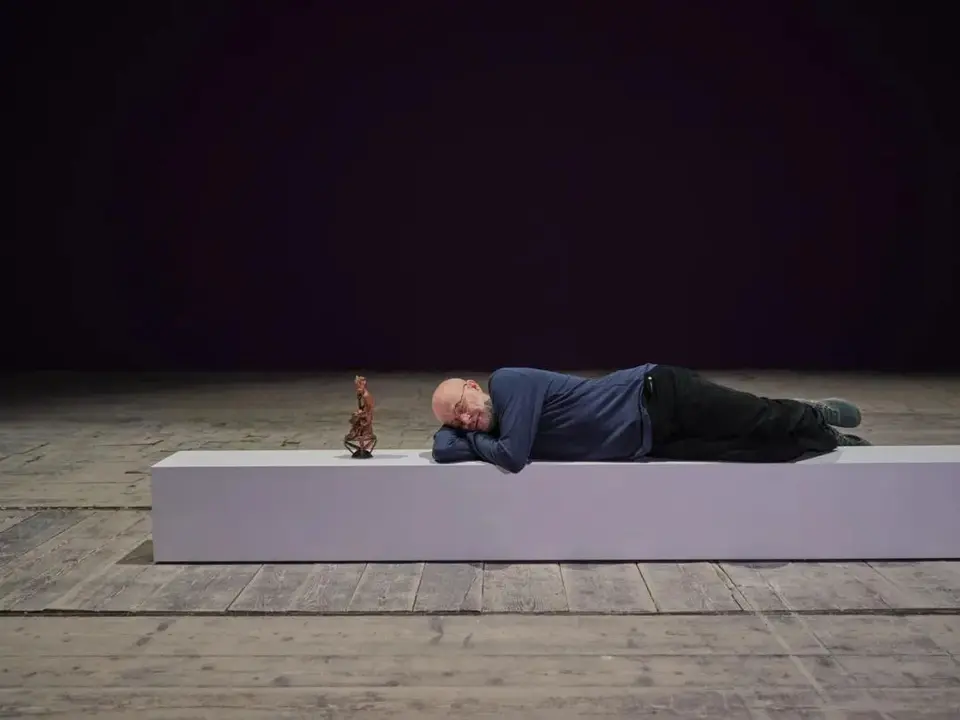
这菩萨太气派了,不知道是什么来头
2024 威尼斯双年展 — Due qui / To Hear
版主: who
Re: 威尼斯双年展 — Due qui / To Hear
https://duequi-tohear.it/project
“We listen in order to interpret our world and experience meaning” (Pauline Oliveros)
Playing on the homophones “two here” (in Italian, due qui) and “to hear,” the title of this project suggests how hearing—or better, listening—is a form of attention to others. The acoustic paradigm should be seen here as a physical experience, but also as a metaphor, an invitation to pay attention, to listen to the Other, be it a human being, a mechanical element, or a natural form. In Bartolini’s view, art is a path to knowledge, and the project suggests that “lending an ear” could become a tool for self-improvement within the community of this world.
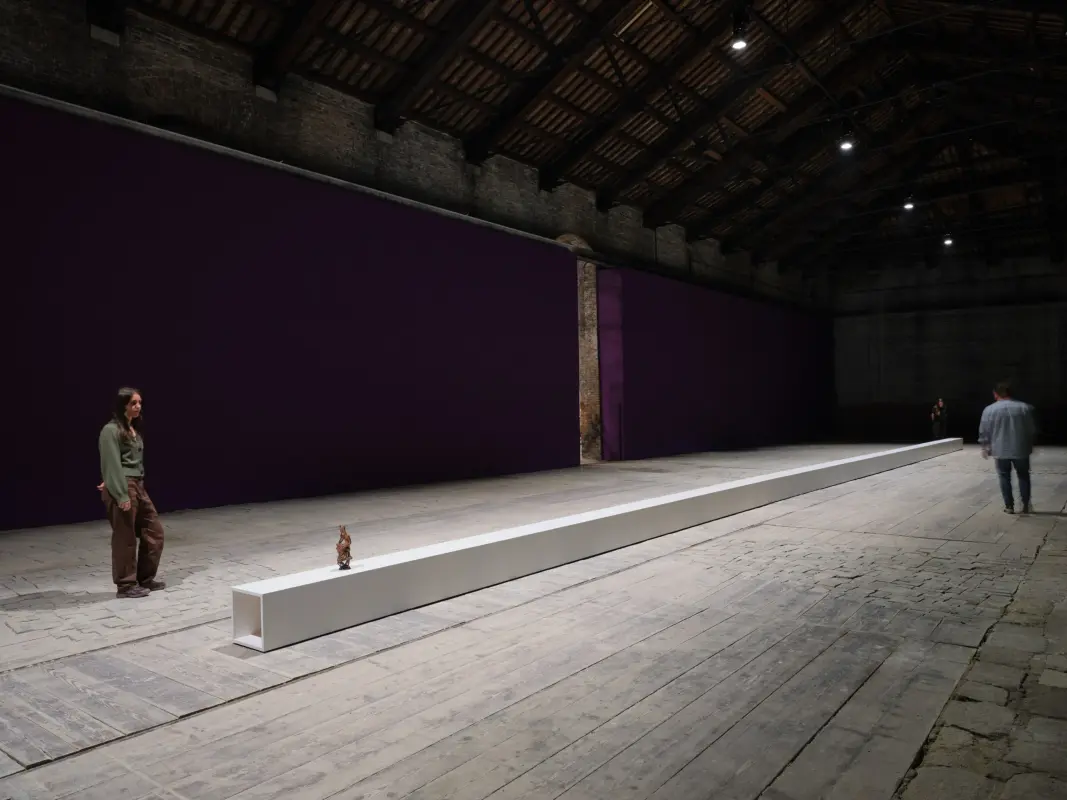
Due qui / To Hear is also the fullest expression to date of a collaborative approach that Bartolini frequently employs, involving many different figures. The skills and languages of music (Caterina Barbieri, Gavin Bryars, Kali Malone), literature (Nicoletta Costa, Tiziano Scarpa), and technical fields (engineers, organ builders, artisans) have contributed to defining the artistic and curatorial project in all of its complexity, like a polyphonic composition for many voices. Through sculptures, installations, sound works, and performances, with a range that is characteristic of the artist’s practice, it aims to create a context of experience. Visitors to the Pavilion can use either of two entrances—from the Tesa or from the garden—and move through three areas built around different forms of motion and stasis, acoustic experiences and meeting points. All of the works respond to the physical characteristics of each exhibition space, without adopting any form of display.
As is often the case in Bartolini’s practice, the project is structured around certain opposite principles, charting a potentially circular path. While at either end we find large empty spaces filled with sounds of a very different nature, the main space is almost entirely occupied by a vast, labyrinthine installation that is both tall and wide (Due qui, 2024). While the works at either end allude to different forms of immobility and apparent inaction (Pensive Bodhisattva on A Flat and A veces ya no puedo moverme, both 2024), the larger Tesa is instead transformed into a realm that visitors can walk through at their own pace and in different directions, as if encouraged to roam and investigate.
Along this two-way path, the Bodhisattva encountered in the Tesa and the tree evoked in the garden respectively embody a principle of spirituality and a principle of nature. Despite their seeming inactivity, the tree connected through its roots and the Bodhisattva sitting in thought—like the opportunity to contemplate the pulsation of a natural element at the center of the main room (Conveyance, 2024)—represent what may be deeper forms of interaction with the World. Because “listening is a form of inactivity in which the ego, the locus of distinctions and delimitations, falls silent. The listening ego immerses itself in the totality, in the unlimited, in the infinite.” (Byung-Chul Han).
– Luca Cerizza